The Platform That Made 5,000 Employees Feel They Belonged
A leading UK asset and wealth management firm / Web, Mobile
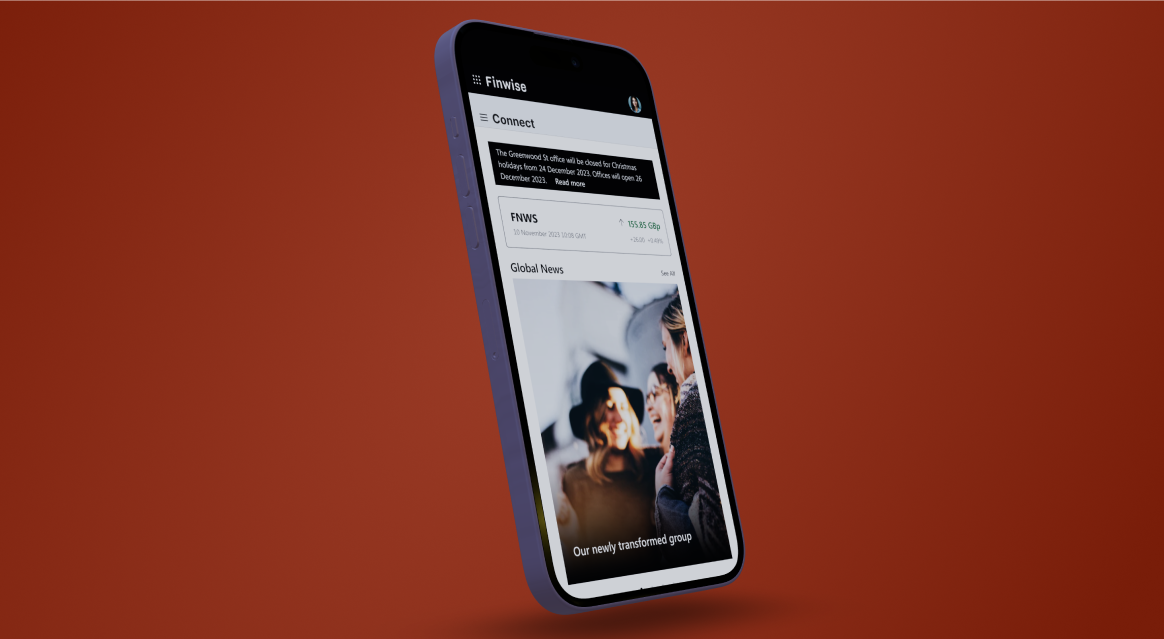
A hyper-personalised employee experience platform for a leading UK asset and wealth management firm. It served 5,000+ colleagues across four global regions. The platform leveraged existing machine learning investments to personalise interactions for every employee.
CLIENT
A leading UK asset and wealth management firm
MY ROLE
Led product design from the first workshop to the day it went live. Leading vision, UX research, strategy, UI (web/mobile), Usability testing, design system, delivery & post‑launch support.
COLLABORATION
Cross‑org partnership (client, Microsoft), aligning business & tech; collaborated with global cross‑functional stakeholders.
The Impact
£0.25M
Saved Annually
Microsoft Partner Award
Nomination
4,000+
Views On Day One
28,000+
Page Visits
This is our organisation at its finest. Our new employee engagement portal makes things faster and easier for colleagues, shores us up for future enabling tech and we have made significant savings and reduced operational complexity.
HEAD OF COLLEAGUE COMMUNICATIONS & Experience
The team have done a fantastic job of bringing this to life, problem solving and innovating, while utilising the platforms out of the box functionality so we don't create Technical Debt.
Chief Enterprise Technology Officer
Discovery
A colleague in Singapore put it better than any data point could, that one sentence reframed the entire brief.:
I was tired of seeing posts about muffins in the London office kitchen. Going forward, I wanted content that felt like it belonged to me.

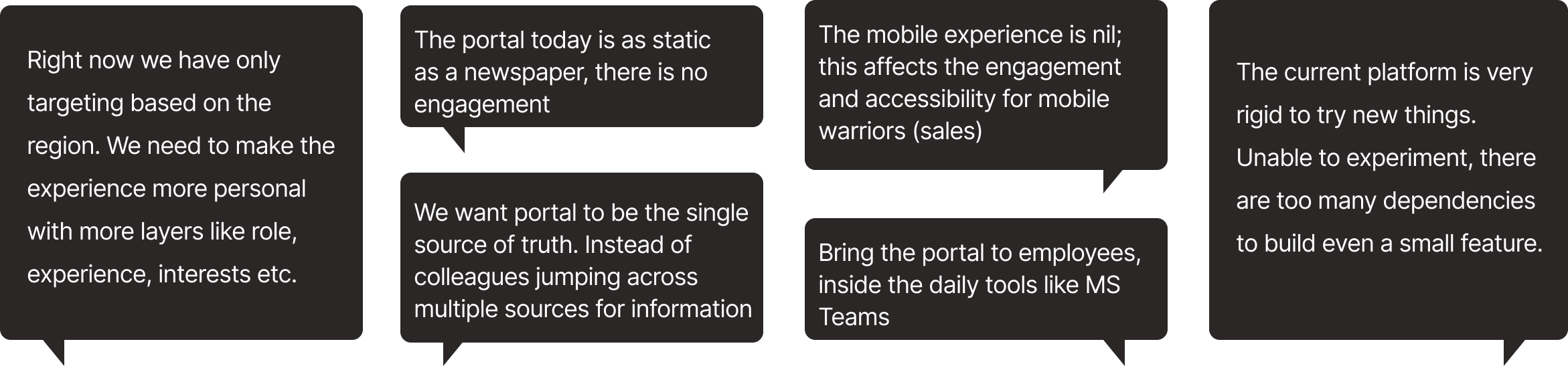
The Experience Layer: The platform felt built for London and exported everywhere else. Regions outside the UK disengaged and stopped maintaining their pages. The portal today is as static as a newspaper. There is no engagement.
The Operations Layer: Communicators were fighting the platform to do their jobs. The system was so rigid that ideas across the business rarely made it to reality. There are too many dependencies to build even a small feature.
The Experience Layer:The platform felt built for London and exported everywhere else. Regions outside the UK disengaged and stopped maintaining their pages. The portal today is as static as a newspaper. There is no engagement.
The Operations Layer: Communicators were fighting the platform to do their jobs. The system was so rigid that ideas across the business rarely made it to reality. There are too many dependencies to build even a small feature.
The Opportunity
Discovery surfaced the organisation already held licences for a modern productivity ecosystem capable of powering a significantly richer experience. One that lived natively inside the tools colleagues already used every day.
We made the case for this direction during discovery. That recommendation became the foundation everything was built on, resulting in substantial annual savings in licensing costs.
Multi-Track Research
We ran research across three groups simultaneously:

We spoke to employees across the UK, US, Singapore, and EMEA. Leadership briefings, one-on-one interviews, and deep dives with technical teams. We analysed existing platform data alongside qualitative findings to understand what people actually did versus what they said they needed.
Stakeholder Voice
Opportunity Areas
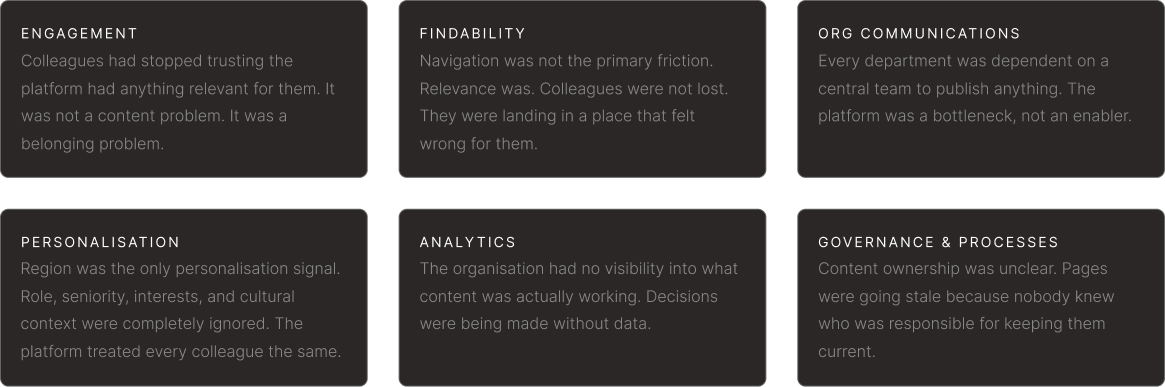
Six opportunity areas emerged from the combined findings of our research methods.
The Pivot
We had been designing for findability. We needed to design for belonging. Colleagues were not struggling to find information. They had stopped trusting the platform because it offered little that felt relevant to them.
That single insight, surfaced through conversations with regional leads and end users outside the UK, changed the entire direction. Personalisation expanded from one layer to many. Region, seniority, cultural calendar, behavioural signals from previous platform usage. Every colleague would see an experience built around them, not just their job title.
Then we hit a harder tension...
The AI Challenge
When we proposed using machine learning for personalisation, surfacing content based on individual behaviour and interest signals, the Corporate Communications team pushed back. Hard.
They saw three colleague types: highly engaged users - active, commenting and sharing, Some occasional users who visited for specific tasks, and some barely used the platform at all. Their concern: Algorithm relying on engagement signals alone could widen the gap instead of closing it.
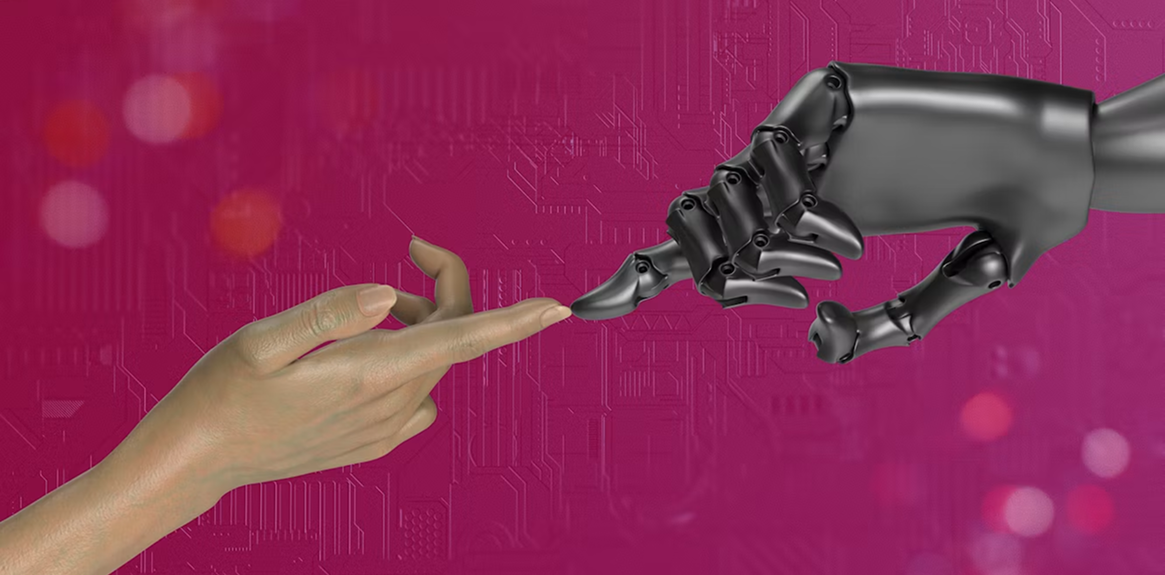
Our proposal: keep the algorithm.
But do not give it full control.
The machine learning model chose what content each colleague saw, with Corporate Communications reviewed patterns to catch what the algorithm missing. We piloted this on a few sections, then scaled.
It worked, comms gained confidence, and the algorithm gave colleagues relevance. Even barely engaged users began to connect. Smart personalisation, backed by human in the loop, made belonging scalable.
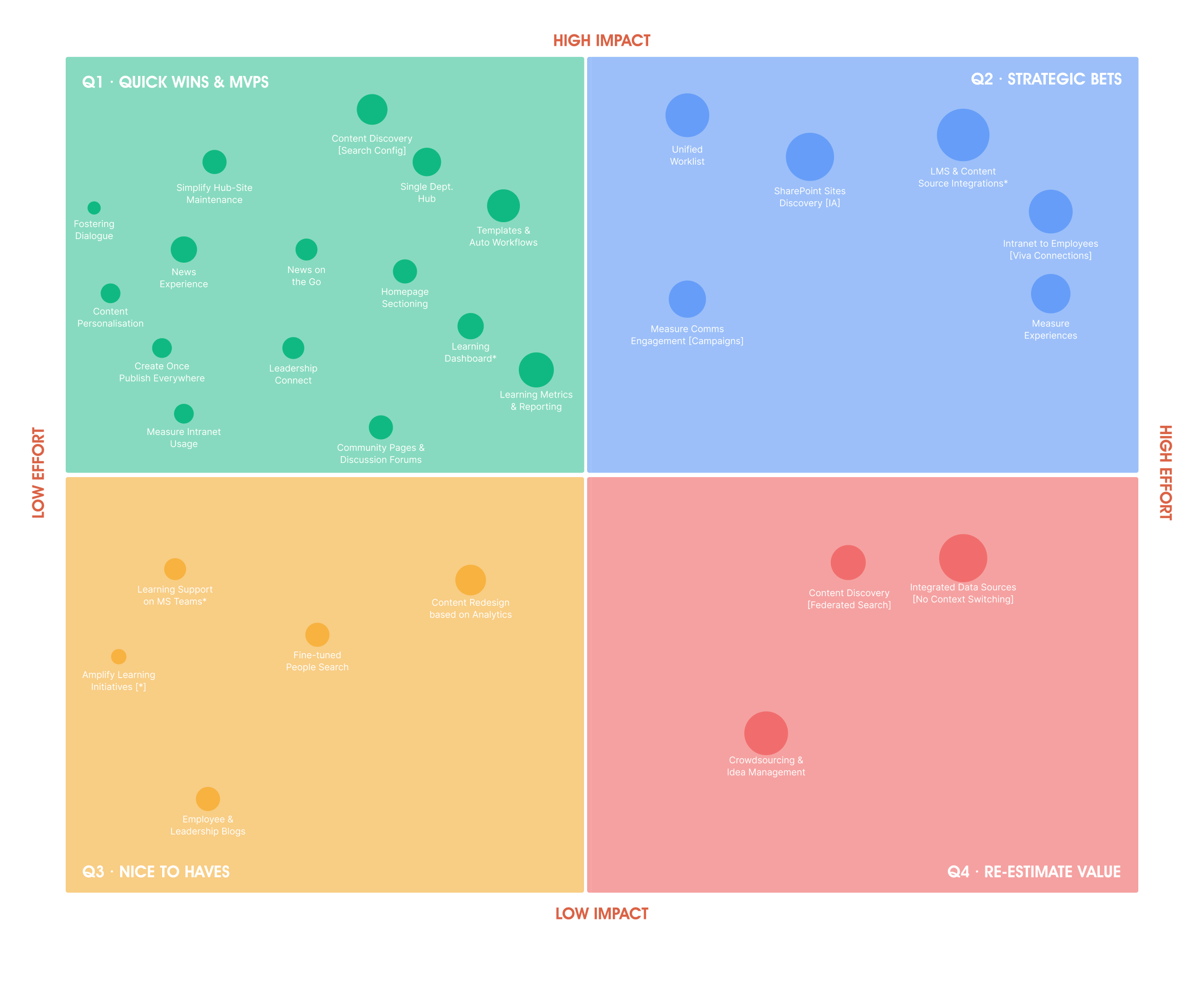
Features prioritised by effort and impact. Multi-layered personalisation was placed at the centre of MVP rather than deferred to a future phase.
Iteration Moment
Initial wireframes were built around navigation restructuring. Tree testing across 16 real-world scenarios showed us exactly where colleagues struggled.
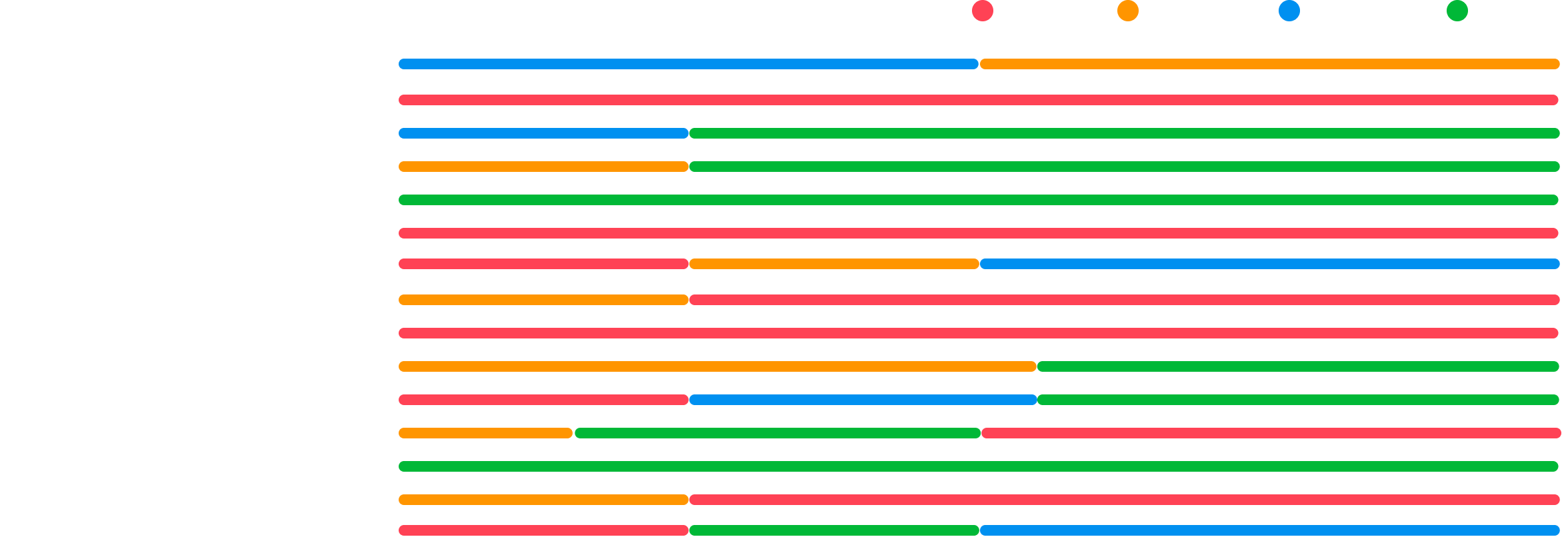
Usability testing told us something the tree testing had not. Navigation was not the primary friction. Relevance was. Colleagues were not landing in the wrong place. They were landing in a place that felt wrong for them.
Home
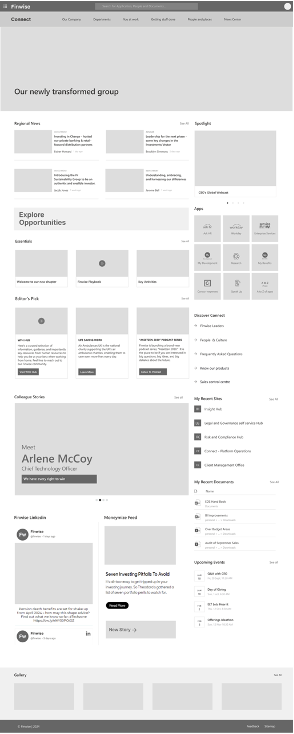
We shifted focus. From where things lived to what people saw when they landed on the site.
Department
What Shipped
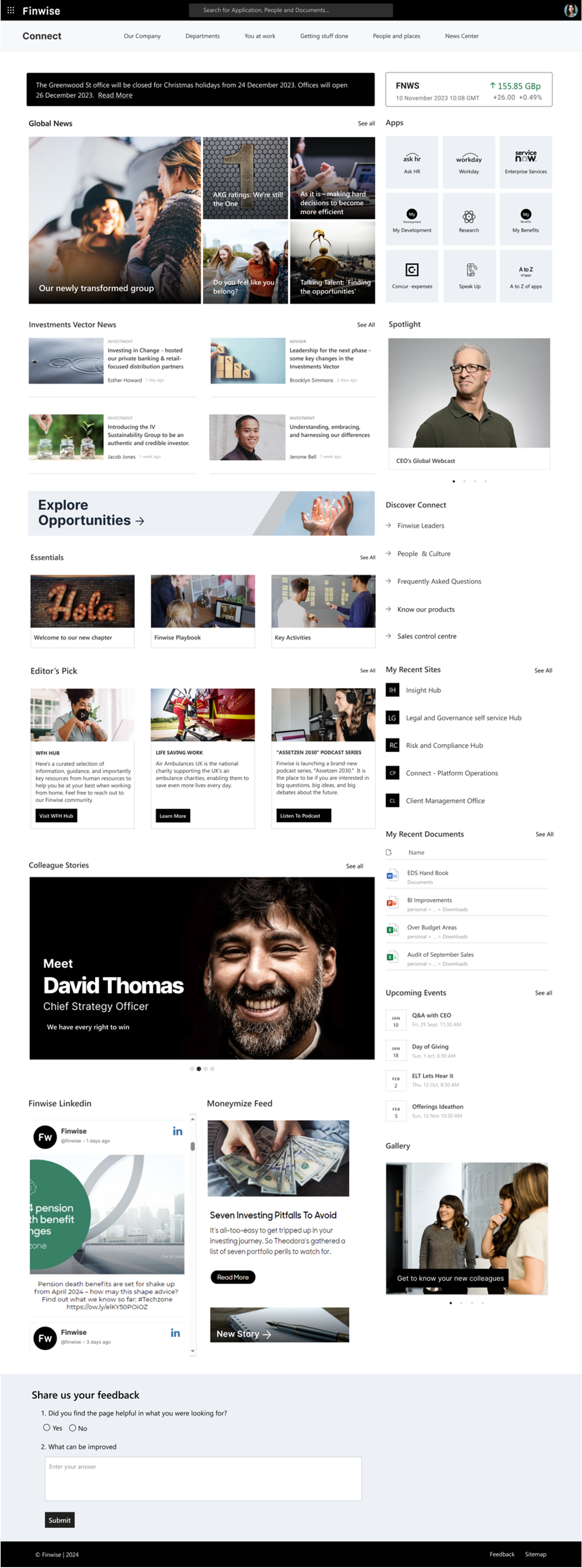
Home Page
A hyper-personalised employee experience platform. Built to work across web and mobile. Every colleague sees a different home page. Personalised by region, department, seniority, and behavioural signals. Integrated natively with the productivity tools colleagues already used every day. Colleague stories bring the human side of the organisation to the surface.
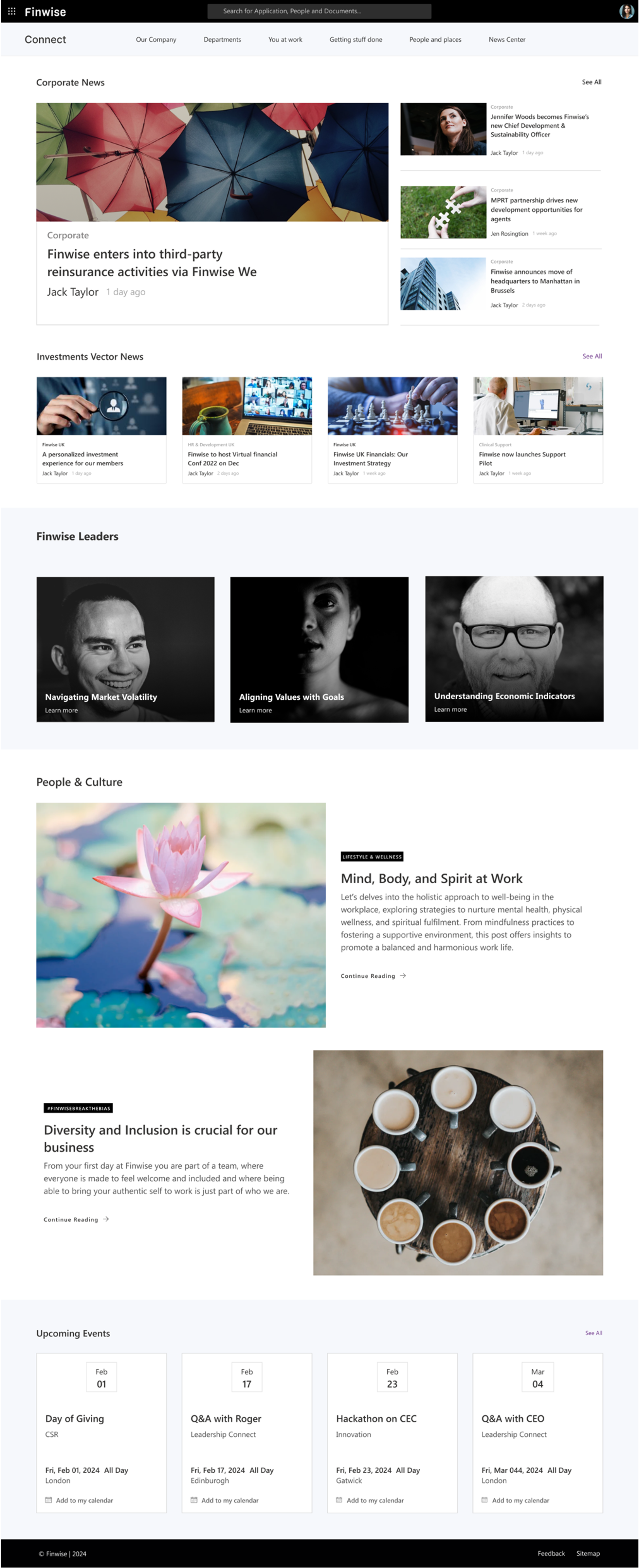
News Center
Content is tagged and targeted by region and role. A colleague in Singapore sees news relevant to their market. Departments can publish independently without routing everything through central comms.
Mobile Access
Mobile access was introduced for the first time. Colleagues could engage on the move, during commutes, between meetings, after hours. Previously, the platform was desktop only.
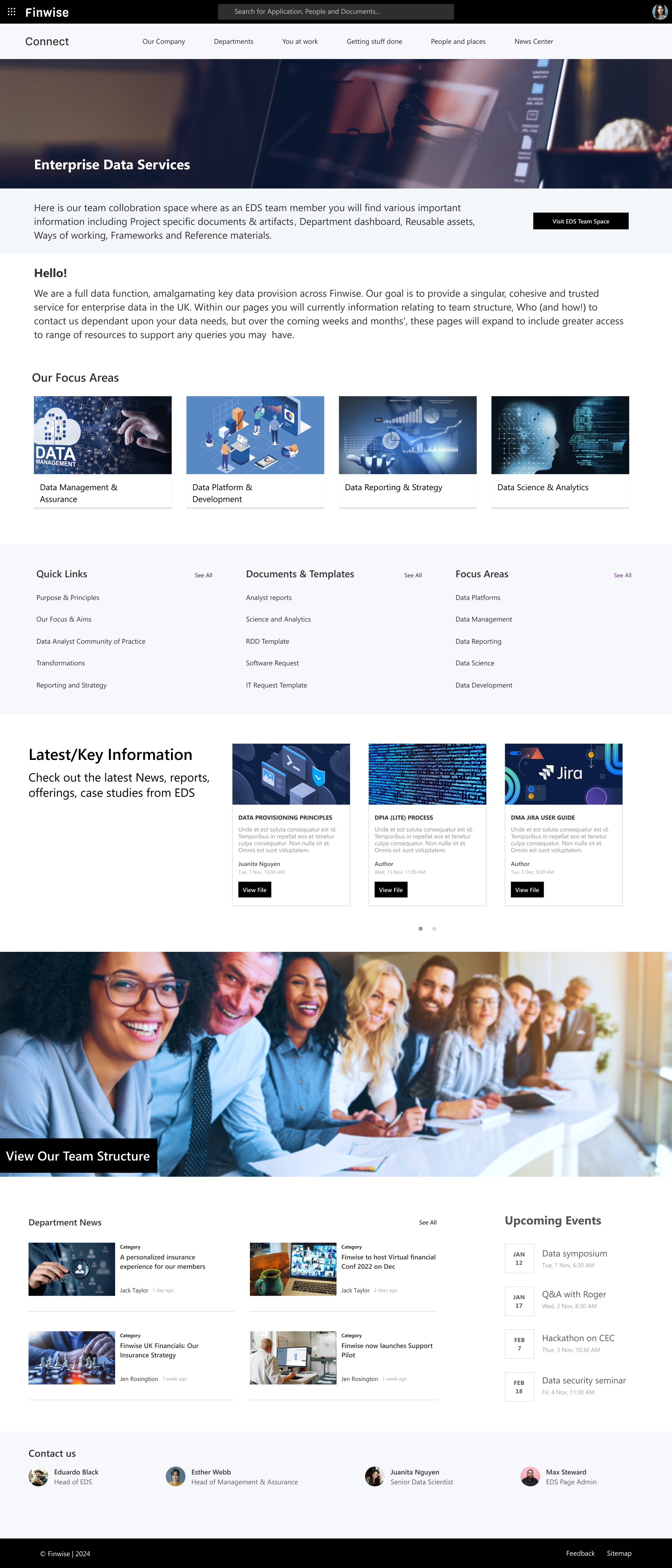
Department Page
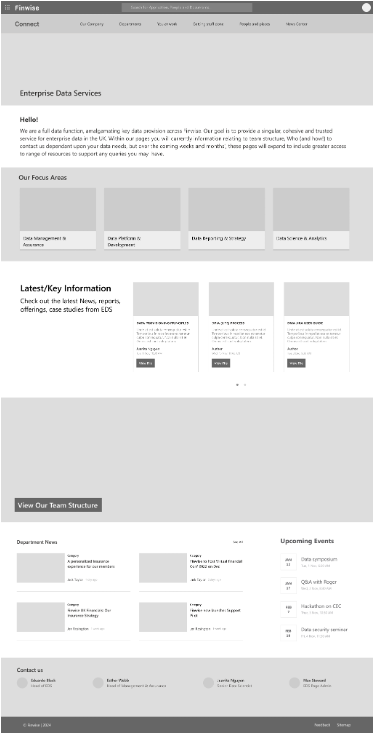
Departments gained full autonomy to publish and manage their own content. The dependency on central IT and comms teams for every update was removed.
Closing Impact
The organisation will save £0.25M annually. The work was nominated for a Microsoft Partner Award in the Design Honour category. And it was shared as a reference case with another major financial services organisation, recognised as a benchmark for employee experience design at scale.
But the number that stayed with us was not the cost saving. It was one colleague from Asia Pacific, writing after launch:
"Now I feel that I belong"
That is what the design was for.
More Case Studies

E-Commerce at 35,000 feetProject type